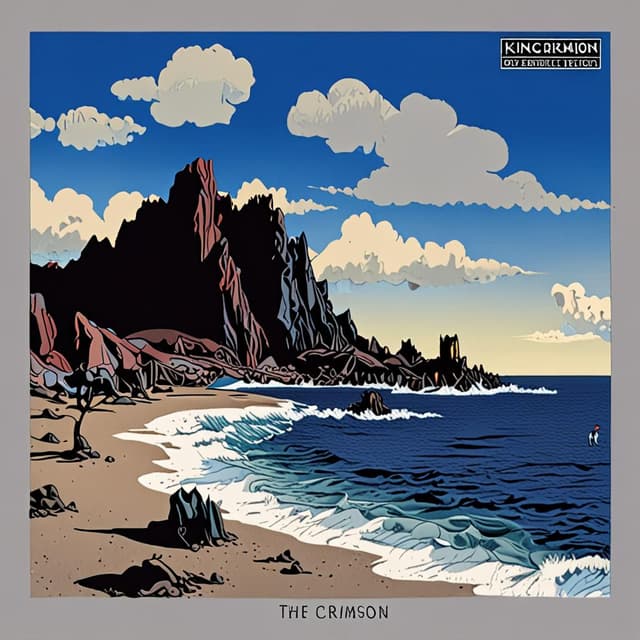
| Genre | Psychedelic rock • Folk rock • Avant-garde |
| Title | Islands |
| Artist | King Crimson |
| Impact | Showcased the band's atmospheric, folk-tinged sound before their progressive rock era |
| Lineup | Judy Dyble (vocals) • Robert Fripp (guitar) • Peter Sinfield (bass) |
| Outcome | Led to King Crimson's early dissolution in the late 1960s due to lack of commercial success |
| Release year | 1967 |
| Critical reception | Mixed, but has gained a cult following |
"Islands" was the debut studio album by the British psychedelic rock band King Crimson, released in 1967 on Island Records. In contrast to the progressive rock style the group would become renowned for in the 1970s, "Islands" showcased a more atmospheric, folk-influenced sound that blended elements of psychedelic rock, classical music, and free improvisation.
King Crimson was formed in 1966 in London by guitarist Robert Fripp, who had previously played in the obscure psychedelic band The League of Gentlemen. Fripp recruited a rotating cast of musicians, including American-born vocalist Judy Dyble, Peter Sinfield on bass, and drummer Giles Giles Giles. This original lineup recorded the group's debut album "Islands" in 1967.
While King Crimson attracted a loyal following on the underground music scene, the band struggled to find commercial success. Fripp's ambitious vision for the group clashed with their label's desire for a more accessible, radio-friendly sound. Tensions came to a head during the recording of "Islands", with Fripp frequently butting heads with producer Tony Visconti.
"Islands" is notable for its eclectic yet cohesive musical approach, blending elements of folk music, modal jazz, and the psychedelic sensibilities of the era. The opening title track combines lyrical acoustic guitar work, ethereal synthesizers, and choral vocal textures reminiscent of Gregorian chant. Other standouts like "Song of the Gulls" and "The Letters" showcase Dyble's evocative vocals and Fripp's intricate, atmospheric guitar work.
Lyrically, the album touches on themes of nature, spirituality, and the human experience, with Sinfield's poetic, impressionistic wordplay evoking a sense of mystery and wonder. Tracks like "Book of Saturday" and "Cadence and Cascade" create a pastoral, almost pastoral-like mood that contrasts with the album's more experimental flourishes.
Upon its release in 1967, "Islands" received a mixed critical response. Some reviewers praised the album's innovative sound and poetic sensibilities, with Melody Maker calling it "a work of genuine psychedelic genius." Others were more lukewarm, finding the compositions overly indulgent and lacking in commercial appeal.
Commercially, "Islands" was a failure, barely making a dent on the charts and selling poorly. The band's lack of a consistent touring lineup and Fripp's insistence on creative freedom over mainstream accessibility hampered their ability to build a mass audience. Demoralized by the album's poor performance, King Crimson disbanded shortly after its release.
While "Islands" did not achieve the same level of acclaim or influence as King Crimson's later progressive rock efforts, the album has since gained a cult following among fans of 1960s psychedelic and avant-garde music. Its atmospheric, immersive sound and introspective lyrical approach have been cited as an influence on the development of space rock and art rock in the 1970s.
Fripp and Sinfield would go on to form the core of the "classic" King Crimson lineup in the early 1970s, but the sound and spirit of "Islands" remains a unique and underappreciated chapter in the band's history. Reissues and re-evaluations of the album in recent decades have helped solidify its reputation as a forward-thinking, if commercially unsuccessful, entry in the annals of psychedelic music.
